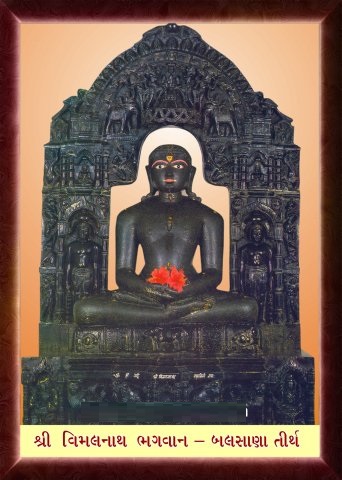
Sacred portrait of Vimalanatha Bhagwan, the Thirteenth Jain Tirthankara
An Immaculate Soul

The Thirteenth light of this Avasarpini.

In Jain tradition, twenty-four Tirthankaras illumine each cosmic half-cycle, ferrying souls across the ocean of existence. Among them, Vimalanatha Bhagwan stands as the Thirteenth — a beacon of clarity whose very name, Vimala, means the immaculate, the unstained.

He was born into the venerated Ikshvaku dynasty — a noble lineage from which many Tirthankaras emerged — to King Kratavarma and Queen Shyamadevi, the rulers of Kampilya. The night of his birth, the queen is said to have beheld auspicious dreams; the earth itself seemed gentler, the seasons more harmonious, and joy moved freely through the kingdom.

As a prince, he was schooled in the arts, scriptures, and statecraft of his time. Yet the gold of worldly pleasures could not anchor his attention. Within him, a quieter knowing was awakening — an inner gaze turning, gently and irrevocably, toward the eternal.

After fulfilling his royal duties with grace, Vimalanatha renounced the throne. He embraced rigorous penance, tamed the senses with luminous discipline, and at length attained Kevala Jnana — omniscience. He preached the Dharma with a voice that calmed stormy hearts, and at the end of his earthly journey, he ascended to the state of Siddha — a liberated soul, free of karma, abiding forever in the radiance of his own true nature.
Title
Thirteenth Tirthankara
Era
Avasarpini · Present Cycle
Birthplace
Kampilya
Dynasty
Ikshvaku
Father
King Kratavarma
Mother
Queen Shyamadevi
Birth Date
Magh Shukla Tritiya
Final State
Siddha · Liberated
Ikshvaku
Royal Solar Dynasty
Kratavarma
Reigning Sovereign · Father
Shyamadevi
Auspicious Queen · Mother
Kampilya
The Sacred Birth City
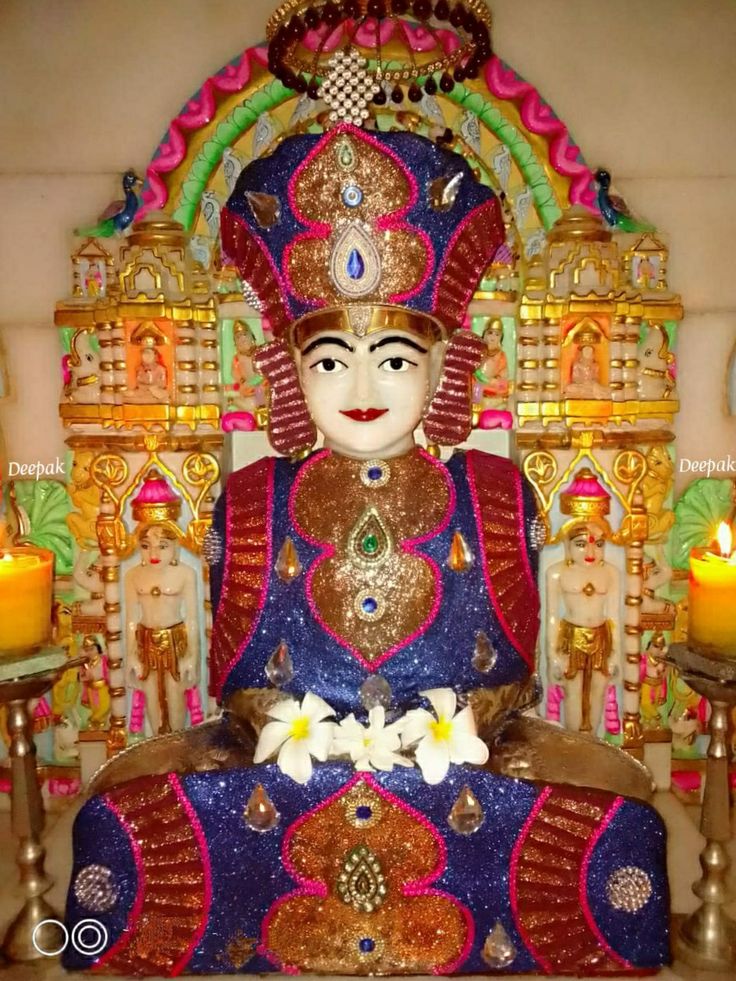
Vimalanatha Bhagwan revered as a Siddha — a liberated soul beyond karma
Reverence in Tradition

An ever-burning lamp in Jain memory.

Across the unbroken centuries, Vimalanatha Bhagwan has been venerated in Jain scripture, ritual, and devotional song. Temples bearing his image rise across the Indian subcontinent — from Kampilya, his sacred birthplace, to historic shrines in Gujarat, Maharashtra, Bengal, and beyond.

His symbolic emblem — the boar (varaha) — recalls a wild and primal nature steadied through grace. His kashaya-tree (Jambu / Patli) marks the place of his realisation. Each gesture of sacred art preserves his luminous quietude, inviting devotees into a reflective stillness.

He is honoured as the soul who shed even the most subtle stains of karma — and so reminds us that purity is not a far-off ideal, but a possibility within every awakened heart.

— Where memory becomes light.
Continue Reading

Walk the chapters of his luminous journey.

From the auspicious dawn at Kampilya to the silent ascent into Siddhahood — every step a teaching, every breath a benediction.