Each Tirthankara’s life unfolds as a sacred geography — five great events (Panch Kalyanaka) whose echoes ripple through every devotee’s practice. Conception, birth, renunciation, omniscience, and final liberation are not only biographical milestones, they are the universal stations of the awakening soul.
Below, follow Vimalanatha Bhagwan along the eight luminous chapters of his earthly journey — a path traced in stillness, kindness, and unwavering inward gaze.
Queen Shyamadevi witnesses the fourteen great dreams that herald the descent of a Tirthankara — the kingdom of Kampilya stirs with subtle joy.
On the third day of the bright fortnight of Magh, the soul that would be Vimalanatha is born — the heavens themselves hush in reverence.
Trained in the noble arts and statecraft of the Ikshvaku tradition, he assumes the duties of kingship — yet remains untouched, as a lotus on water.
A trembling leaf, a passing season — and the prince beholds the great truth: that all worldly forms are fleeting, that liberation alone is real.
He sets aside the crown, the throne, the silken robe — and dons the ascetic’s garb. Kampilya weeps, then is made richer by his offering.
Meditation, fasting, the silent vigil of the senses. Karma is not opposed but observed — and observation, made luminous, dissolves it.
The veils fall away. He becomes a Kevali — knower of all that is and all that has been. From this clarity, the Dharma flows like water from a hidden spring.
Freed of every karmic residue, his soul ascends to the eternal abode of Siddhas — abiding forever in unbroken radiance, beyond birth and beyond death.
When the soul beholds itself, untouched by the dust of karma — that is the moment all journeys end, and the eternal one begins.
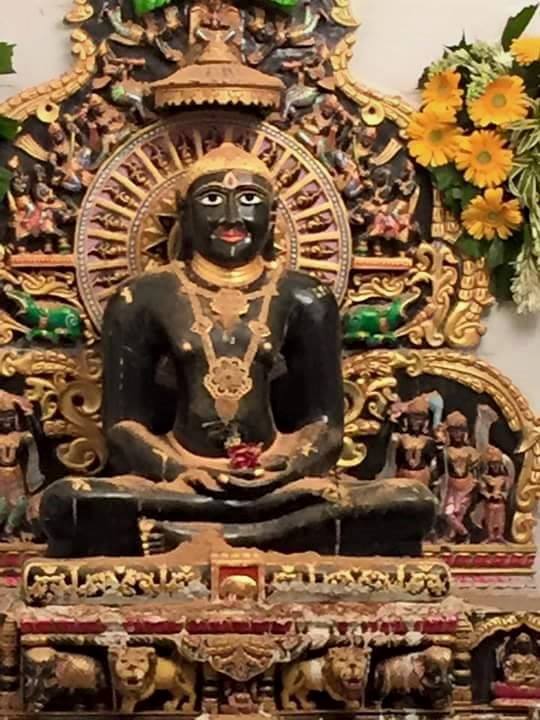
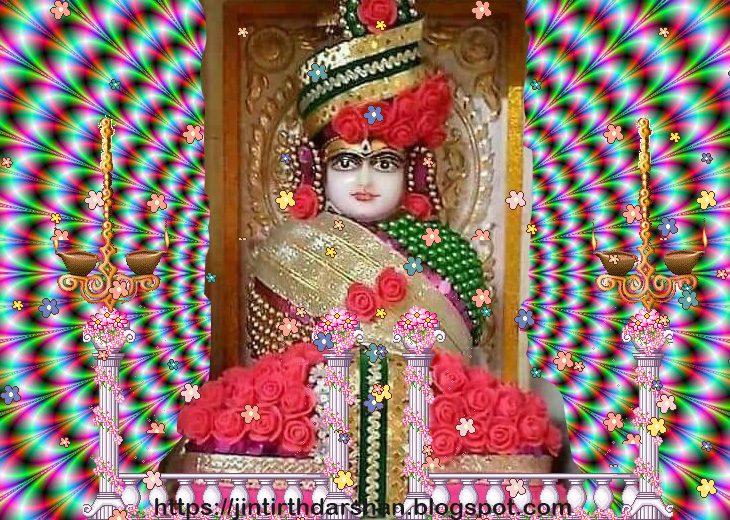
Long after his earthly form dissolved into Siddhahood, sculptors carved his quietude in stone, pilgrims lit lamps before his image, scribes copied his teachings into bound manuscripts. Each act preserved a living echo — the very air around his shrines softened by reverence.
The 2200-year-old pratima at Aurangabad and countless other sacred forms throughout the Indian subcontinent are not relics. They are continuing teachers — invitations to the same inward turn, the same gentle dissolving of pride and fear that he himself made long ago.
Explore Heritage